Showing posts with label Virtual Event. Show all posts

Saturday, July 18, 2026

CFP Medievalisms in Times of (mis)information (9/1/2026; Online 10/9-10/2026)

Medievalisms in Times of (mis)information


deadline for submissions:
September 1, 2026

full name / name of organization:
International Society for the Study of Medievalisms

contact email:
anchietaguerra@gmail.com

source: https://call-for-papers.sas.upenn.edu/cfp/2026/07/02/medievalisms-in-times-of-misinformation


In 1996, Carl Sagan warned us of a time when people would lose their ability to question, “when awesome technological powers are in the hands of a very few . . . when, clutching our crystals and nervously consulting our horoscopes, our critical faculties in decline, unable to distinguish between what feels good and what’s true, we slide, almost without noticing, back into superstition and darkness.” Maybe Mr Sagan was somewhat pessimistic when writing The Demon-Haunted World. But then again, in times of conspiracy theories, Ancient Aliens, Antivaxxers, and Holocaust Deniers, the Age of Information appears just as capable of spreading dangerous frauds and charlatans as it is of disseminating reliable scholarship.


Now we witness a Minister of War, an evangelical, tattooed with the medieval crusader motto “Deus vult”, calling for an American Crusade. In another country, we see the memory of the Knights Templar invoked again and again as a founding myth to justify a quasi-manifest destiny. And all over the world, the achievements of our predecessors are often discarded as impossible, explained as the works of aliens, supernatural forces, or ancient lost (often white) civilisations, disregarding the works of historians, archaeologists, and other researchers. The past is ripe for conspiracies, and the Middle Ages are a particularly fruitful part of it.


The Studies of Medievalisms, often in dialogue with disciplines like Literature, History, Cultural Studies, and others, may not always identify itself as a hard Science. Nevertheless, it is still an academic field with its own methodologies, structures, and rigour. Faced with this encroaching darkness, as Sagan would say, we invite scholars to submit papers examining the multiple challenges of researching medievalisms and how we should address the growing spread of disinformation. Of course, other themes related to medievalisms, neo-medievalisms and the reception of the medieval as a whole are all welcome.


Organised by the ISSM (International Society for the Study of Medievalisms), the annual conference is the oldest to be entirely dedicated to the subject of medievalisms, and this year, for the first time, it will be taking place in the South Americas, Brazil. For this to be possible, we will be working with the Federal University of Pelotas (UFPel) to promote dialogue with professors and researchers from different countries and institutions, “aiming to connect the public with scholars engaged in Medievalism Studies around the world.”


The conference is accepting papers and entire sessions via this link. Submissions are open until September 01, 2026.


This is a 100% online conference, which will take place between October 9 and 10. More information about the guests, keynotes, and schedules will start to be published soon.


For more information, please email us.


Proposal:
– Each participant may submit up to 2 papers.
– Proposals for entire sessions can include a maximum of up to 6 people divided into two tables of 3.
– English will be considered the default language. Sessions in Portuguese, French, and Spanish will only be considered if there are enough papers to fill them.
– The themes of the proposals must include medievalisms, neo-medievalisms, or medieval reception. Papers that work with representations and memories of the medieval period and the history of historiography about the period are also welcome.
– In addition to the abstract (maximum of 500 words), it is possible, but not mandatory, to send the full text upon registration. This can assist in the evaluation of the proposal.
– For proposals for a complete session, the abstract must (in up to 600 words) describe the theme as a whole, as well as clearly identify what each proponent will talk about.

Evaluation:
– The evaluation, acceptance, or elimination of submission is the conference’s Organization’s responsibility through a double-blind peer-reviewing process.

General Observations:
– The certificate of presentation will be issued only to presenters who were not absent during the entire panel in which they participated.
– The result will be published on September 15, 2026
– The presenter’s fee will be $20 for Staff and $5 for Students and Independent Scholars. Any requests to waive the fee should be sent to our email BEFORE the deadlines.


Last updated July 14, 2026


Wednesday, July 15, 2026

CFP Fostering Interpretive Communities in the Classroom and Research through Adaptation Studies (Roundtable) (Virtual) (9/30/2026; NeMLA 3/6-9-2027)

Fostering Interpretive Communities in the Classroom and Research through Adaptation Studies (Roundtable) (Virtual)

Co-organizers Michael A. Torregrossa and Carl B. Sell

Sponsored by Association for the Advancement of Scholarship and Teaching of the Medieval in Popular Culture

Call for Papers - Please Submit Proposals by 30 September 2026

58th Annual Convention of Northeast Modern Language Association (NeMLA)

Salve Regina University (Newport, RI)/Online.

Hybrid event: 6-9 March 2027


This session’s modality is Virtual Only, meaning all presentations will be delivered via Zoom regardless of whether the presenters are in-person.


Rationale

Explorations of adaptations offer many ways to investigate the conference theme of Empowering Communities. Adaptations, especially contemporary ones, create opportunities for inclusion that may not have been present in the source. This forges a new space for receivers of the text to connect to its narrative. Highlighting how and why these new works appeal to and have an effect on us can help our students (and ourselves) relate to older material and see the ways that a story can find new relevance.

Topics might include adaptations that recast, reset, and/or restage a text; adaptations that rewrite and/or reboot a text; adaptations that expand texts (such as prequels, midquels, or sequels); and adaptations that present ways to remedy problematic texts and authors.

We welcome investigations of adaptations across all media, as well as adaptation within transmedia franchises/universes.


Submission Instructions

All proposals must be submitted into the CFPList system at https://cfplist.com/nemla/Home/S/22514 by 30 September 2026. You will be prompted to create an account with NeMLA (if you do not already have one) and, then, to complete sections on Title, Abstract, Brief Bio, Media Needs, and Modality. This session’s modality is Virtual Only, meaning all presentations will be delivered via Zoom regardless of whether the presenters are in-person.

Notification on the status of your submission will be made by 16 October 2026. If accepted, NeMLA asks you to confirm your participation with the session chairs by accepting their invitation and by registering for the event. The deadline for Registration/Membership is 9 December 2026. For the 2027 Convention, registration will be the same for in-person and remote attendance. (See NeMLA’s Membership and Registration page, at https://www.nemla.org/about/members.html, for full details.)


Be advised of the following policies for the Convention: All participants must be members of NeMLA for the year of the conference. Participants may present on up to two sessions of any type. Registrants at NeMLA may not present the same abstract/paper on two different sessions. (See NeMLA’s Presenter Policies page, at https://www.nemla.org/convention/policies.html, for further details. Information on Session Types can be found at https://www.nemla.org/convention/sessions.html.)


NeMLA offers limited funding for travel to graduate students and to contingent faculty, adjunct instructors, independent scholars, and two-year college faculty. Details can be found at NeMLA’s Travel Awards page at https://www.nemla.org/awards/travel.html.


Thank you for your interest in our session. Please address questions and/or concerns to the organizers at MedievalinPopularCulture@gmail.com.


For more information on the Association for the Advancement of Scholarship and Teaching of the Medieval in Popular Culture, please visit our blog, Mass Mediævalisms: The Middle Ages of Popular Culture, at https://MedievalinPopularCulture.blogspot.com/.


Tuesday, June 9, 2026

CFP Medievalist Fantasy and Science Fiction (6/13/2026; NEPCA 10/15-17/2026 online)

Northeast Popular Culture Association conference
15-17 October 2026
ONLINE SESSION


Session Proposal:

Medievalist Fantasy and Science Fiction


This session intends to put together discussions about medievalist fantasy and medievalist science fiction. It could be argued that medievalist fantasy is more related to the historical Middle Ages while science fiction medievalism is more generic, hence it includes elements of medieval provenance, yet without resorting to the historical period. Yet medievalist science fiction has been trying to overcome this limitation and increasingly there are analyses of how medieval history and literature reverberates in sci-fi. On the other hand, medievalist elements in fantasy that do not point to specific elements in the history or literature need to be adequately addressed as well.

Please send an abstract of up to 250 words to: annaczarnowus@op.pl
The deadline for the abstracts is 13 June 2026

Friday, November 22, 2024

CFP More Perilous and Fair: Women and Gender in Mythopoeic Fantasy (3/31/2025; 8/2-3/2025)


OMS 4 - Online MidSummer Seminar 2025

Online MidSummer Seminar 2025 logo

Online MidSummer Seminar 2025
More Perilous and Fair: Women and Gender in Mythopoeic Fantasy

August 2-3, 2025
Via Zoom and Discord

OMS Overview

OMS 4 Call for Papers


ONLINE MIDSUMMER SEMINAR 2025
More Perilous and Fair: Women and Gender in Mythopoeic Fantasy
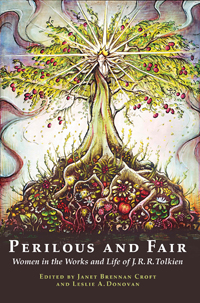
Celebrating the 10th anniversary of the publication of Perilous and Fair: Women in the Works and Life of J.R.R. Tolkien

Co-chairs: Cami Agan, Clare Moore, and Robin Anne Reid

Join us for an online conference that focuses on intersectional feminist approaches to women and gender in fantasy, science fiction, speculative fiction, or other mythopoeic work and that will honor the first anthology on women and Tolkien, Perilous and Fair: Women in the Works and Life of J.R.R. Tolkien (2015), edited by Janet Brennan Croft and Leslie A. Donovan.

Intersectionality, or intersectional approaches, developed out of research and scholarship by Black women, highlighting how aspects of identity (such as race, gender, sexual orientation, or class) overlap and intersect. Since then, feminist scholars in a number of disciplines, including literary studies, have adapted intersectionality in their work.


GUESTS OF HONOR: Janet Brennan Croft and Leslie A. Donovan, co-editors of Perilous and Fair

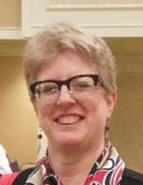
Janet Brennan Croft

Janet Brennan Croft is an Associate University Librarian at the University of Northern Iowa. She is the author of the Mythopoeic Award winning War in the Works of J.R.R. Tolkien (Praeger 2004, reissued in paperback 2024), and has written on the Peter Jackson Middle-earth films, the Whedonverse, Orphan Black, J.K. Rowling, Terry Pratchett, Lois McMaster Bujold, The Devil Wears Prada, and other authors, TV shows, and movies. She is editor or co-editor of many collections of literary essays, the most recent being Loremasters and Libraries in Fantasy and Science Fiction, co-edited with Jason Fisher. She has edited the semi-annual refereed scholarly journal Mythlore since 2006, and is archivist and assistant editor of Slayage: The International Journal of Buffy+.


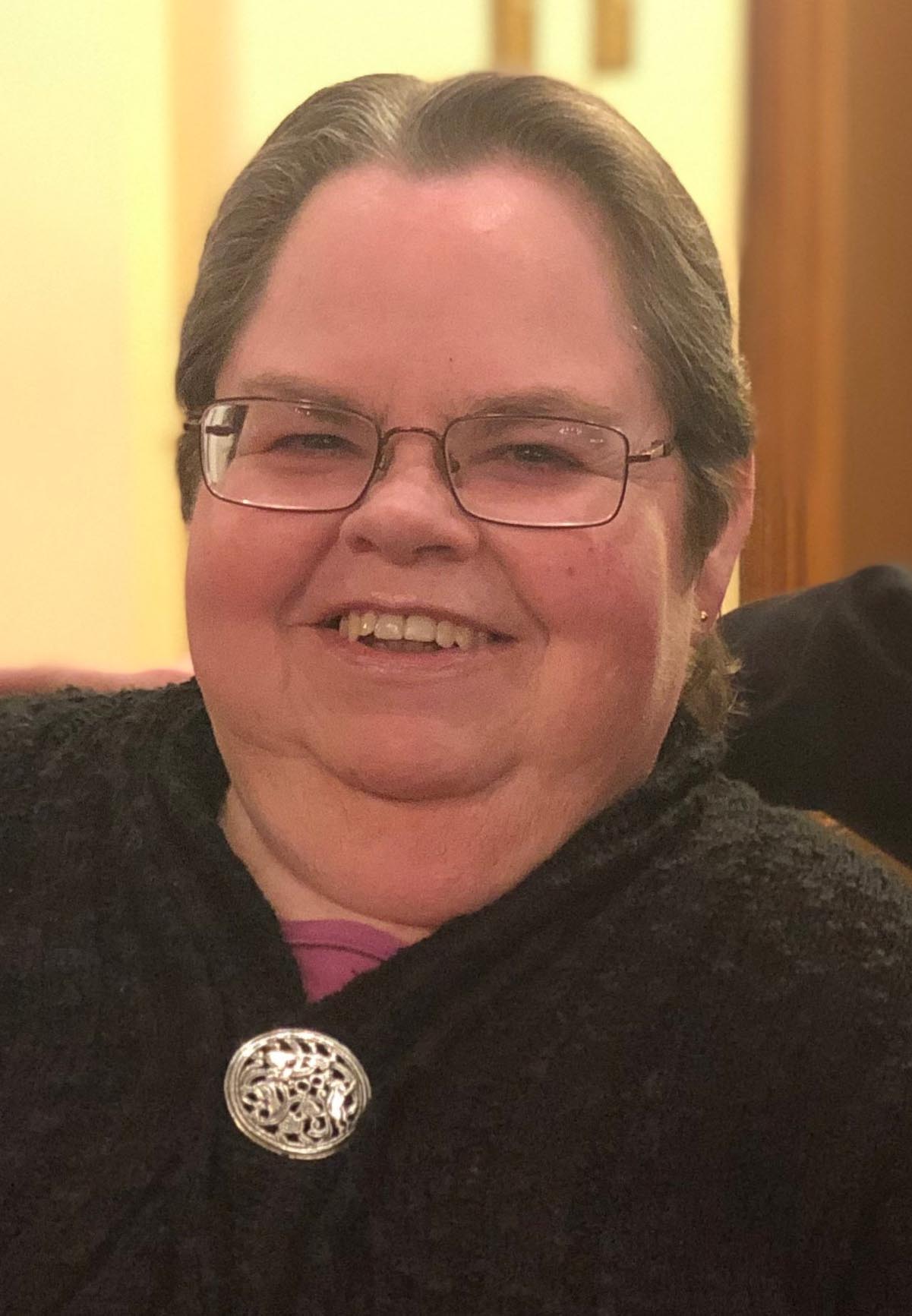
Leslie Donovan

Leslie A. Donovan is Interim Dean and Professor for the Honors College at the University of New Mexico, in Albuquerque, New Mexico, USA. As a faculty member, she teaches varied interdisciplinary humanities courses for undergraduates, among which are six different versions of Tolkien courses. Her Tolkien studies publications include “The Valkyrie Reflex in J.R.R. Tolkien’s The Lord of the Rings: Galadriel, Shelob, Éowyn, and Arwen” (republished several times), “Middle-earth Mythology: An Overview” (Blackwell 2022), and four entries for the J.R.R. Tolkien Encyclopedia (Routledge 2006). She edited Approaches to Teaching Tolkien’s Lord of the Rings and Other Works (MLA 2015). In addition, she is the Editor of Mythopoeic Press.


CALL FOR PAPERS

The CFP deadline is March 31st, 2025.

Download the CFP in PDF format HERE.

The Mythopoeic Society invites paper submissions for an online conference that focuses on intersectional feminist approaches to women and gender in fantasy, science fiction, speculative fiction or other mythopoeic work. While the focus of this seminar is women and gender in mythopoeic works, we encourage proposals that acknowledge and analyze the intersectionality of gender with other aspects of identity, experience, and embodiment, including the non-human. Proposals should engage with developments in women and gender studies that both acknowledge and seek to move beyond the work of Perilous and Fair, drawing on theories and methodologies from recent years.

Aspects of this topic might include but are certainly not limited to any of the following:
  • • Intersections of gender, class, race, ethnicity, sexuality, disability, or neurodiversity with female, asexual, agender, or nonbinary characters (mortal or immortal) in:
    • ⬞ Tolkien’s legendarium
    • ⬞ The works by other Inklings
    • ⬞ Works of contemporary mythopoeic fantasy in any medium

  • • How mythopoeic fantasy texts engage with gender and its intersections with markers such as race, class, speciesism, or material culture, whether through character, structure, or other fantasy conventions such as magic/enchantment, Faerie, non-human and animal sentience, and worldbuilding/Sub-Creation in:
    • ⬞ Tolkien’s legendarium
    • ⬞ The works by other Inklings
    • ⬞ Works of contemporary mythopoeic fantasy in any medium

Papers, panels, and roundtables from a variety of critical perspectives and disciplines are welcome. We are interested in ANY form of media — text, graphic novels, comics, television, movies, music and music videos, games — as long as it can be described as fantasy or otherwise mythopoeic. We also welcome papers on the work of either of our Guests of Honor.

Each presentation will receive a 50-minute slot to allow time for questions, but individual presentations should be timed for oral presentation in 40 minutes maximum. Two or three presenters who wish to present short, related papers may also share one 50-minute slot.

Individual proposals (~200 words) with bios (150 words, maximum) should be sent to: oms-chair @ mythcon.org by March 31, 2025.

Group (two or three presenters) proposals should group the individual proposals together to send to: oms-chair @ mythcon.org by March 31, 2025.

Working bibliographies are welcome, but not required.

Participants are encouraged to submit papers chosen for the conference to Mythlore, the refereed journal of the Mythopoeic Society. All papers should conform to the 9th edition of the MLA Style Manual.


About the co-chairs:

Cami Agan is Distinguished University Professor of English at Oklahoma Christian University, where she teaches British Literature, including a Studies in Tolkien course. Her Tolkien research concentrates on the First Age materials with a particular interest in cultural geography and the elegiac resonances of the lost Beleriand. Her recent publications include articles in Mythlore and Journal of the Fantastic in the Arts, a chapter in Robin Anne Reid’s forthcoming work on race, racisms in Tolkien, and the recently published Cities and Strongholds in Middle-earth (Mythopoeic Press).

Clare Moore is a Ph.D. student at the University of Glasgow. She holds an M.F.A. in Creative Writing and a B.A. in Politics, Philosophy, and Economics. Her research focuses on disability, gender, and race in the works of J.R.R. Tolkien and other fantastic literature and has appeared in MallornJournal of Tolkien Research, and Mythlore. Her essay “‘A Song of Greater Power’: Tolkien’s Construction of Lúthien Tinúviel” won the 2022 Tolkien Society Award for Best Article.

Robin Anne Reid happily retired in 2020 to become an independent scholar. She is editing two anthologies for McFarland: one (co-edited with Christopher Vaccaro and Stephen Yandell) on queer approaches to Tolkien, and the other on race and racisms in Tolkien. She recently curated a collection of responses to a ground-breaking and posthumously published work on racism and The Lord of the Rings by Charles W. Mills (Mythlore #143, 2023). She is the editor for a new McFarland series, Studies in Tolkien, which opens for proposals in 2025. Somewhere in there, she’ll start working on her book about atheist, agnostic, and animist readers of Tolkien.


Saturday, August 10, 2024

Sponsored Session Medieval Monsters as Modern Monsters (virtual) (9/15/2024; ICMS Kalamazoo 5/8-10/2025)


Medieval Monsters as Modern Monsters: Exploring Continuums of the Monstrous (virtual)


Sponsored by Association for the Advancement of Scholarship and Teaching of the Medieval in Popular Culture and Monsters & the Monstrous Area of the Northeast Popular Culture Association

Organized by Michael A. Torregrossa


60th International Congress on Medieval Studies

Western Michigan University (Kalamazoo, Michigan)

Hybrid event: Thursday, 8 May, through Saturday, 10 May, 2025

Please Submit Proposals by 15 September 2024


Thursday, August 8, 2024

CFP Teaching the Middle Ages at the K-12 Level (10/1/2024; Symposium IMA 11/22/2024)

Teaching the Middle Ages at the K-12 Level


deadline for submissions:
October 1, 2024

full name / name of organization:
Illinois Medieval Association

contact email:
mwgeorge.51@gmail.com

source: https://call-for-papers.sas.upenn.edu/cfp/2024/08/02/teaching-the-middle-ages-at-the-k-12-level


Deadline for Proposals: October 1
Session: 2:00 pm (Central) November 22, online via Zoom

Medieval topics tend to intrigue elementary, middle-school, and high-school students. In a teaching environment where time is precious, how do teachers approach the Middle Ages? This session seeks papers addressing issues, opportunities, and innovations in the K-12 classroom to inform the larger community of K-12 teachers and post-secondary educators about how the topic is approached at the K-12 level.

Submit full session proposals or paper proposals (no more than 300 words) to mwgeorge.51@gmail.com no later than October 1, 2024.

Last updated August 8, 2024

CFP Teaching the Middle Ages: Issues, Opportunities, and Innovations (9/11/2024; Symposium IMA 10/18/2024)

Teaching the Middle Ages: Issues, Opportunities, and Innovations


deadline for submissions:
September 11, 2024

full name / name of organization:
Illinois Medieval Association

contact email:
mwgeorge.51@gmail.com

source: https://call-for-papers.sas.upenn.edu/cfp/2024/08/02/teaching-the-middle-ages-issues-opportunities-and-innovations


Deadline for Proposals: September 11
Session: 2:00 pm (Central) October 18

In the last few decades, courses on the Middle Ages and medieval studies programs have been either cut or severely restricted in the United States. In fact, recently a variety of humanities programs have been on the chopping block, forcing and providing an opportunity for specialists in medieval studies to integrate our specialties into other courses. This year’s Illinois Medieval Association Symposium seeks to explore issues incorporating medieval studies into our curricula. We seek papers that deal with problems/solutions, opportunities, and innovations. Single papers (20-minute length) and, especially, full sessions are encouraged.

The 2023-24 IMA Symposium is distributed throughout the academic year, with sessions occurring on specific Fridays beginning at 2:00 pm Central time. All sessions are online via Zoom, and presenters can share their screens.

This session a general session on the topic. Papers and full sessions that don’t fit with the later topics are welcome.

Submit full session proposals or paper proposals (no more than 300 words) to mwgeorge.51@gmail.com no later than September 11, 2024.


Last updated August 8, 2024

Thursday, April 25, 2024

How Interdisciplinary Can We Be? - Kalamazoo 2024 Sponsored Session


Please join us at Kalamazoo online this May for

How Interdisciplinary Can We Be? (Re)Conceiving the Scope of Medieval Studies Today (A Roundtable) (Virtual)

59th International Congress on Medieval Studies (you must register to attend)
Western Michigan University (Kalamazoo, MI)
Virtual Session
Session 46: Thursday, 9 May 2024, from 10:00-11:30 AM EDT


Sponsored by Association for the Advancement of Scholarship and Teaching of the Medieval in Popular Culture


Organized by Michael A. Torregrossa, Bristol Community College


(Per request of one or more participants, this session will not be recorded.)


Presider: June-Ann Greeley, Sacred Heart University
 

Panelists:

(Re)Writing Trauma: The (Good) Wife of Bath as Therapy

Lindsay Pereira, Concordia University


Lindsay Pereira (she/her) is a neurodivergent MA student in her final year of English Literature at Concordia University, in Montreal, Quebec (Canada), with a BA Specialization in English Literature and a background in Health Sciences. At the university level, she is a T.A. Instructor and Evaluator for Concordia’s English Department, working in conjunction with the Centre for Teaching and Learning (CTL) to facilitate the inclusion of Universal Design for Learning (UDL) in pedagogy creation at the graduate level. At the pre-college level, Lindsay provides UDL-based literature-centered workshops for the Lester B. Pearson School Board of Montreal in inclusive, adaptive learning environments and makerspaces. Her research interests include medieval Arthurian literature, learning and teaching through gaming, and inclusive pedagogy, with an aim to destigmatize neurodiversity and disability in education through the lens of English writing. Lindsay has presented her work on medieval studies and experiential pedagogy at conferences, including the 2024 Dies Medievales Conference, 2023 International Congress on Medieval Studies, and 2023 SAGE Graduate Student Colloquium, and looks forward to presenting at the upcoming 29th International Medieval Congress at Leeds University in July.


Toward a new Interdisciplinary approach in Arabic Medieval Literature

Amina Boukail,University of Jijel


Amina Boukail is an Associate Professor of comparative literature and Arabic Medieval literature at the University of Jijel, Algeria. She received her Ph.D. from the University of Annaba (Algeria) in 2016. Her dissertation title was “Arabic’s elements in Hebrew andalusian literature.” Her research interests include Arabic medieval literature, Judeo-Arabic, Iberian studies, Algerian literature, minorities in Arabic world. Her publications include: Arabic Maqamat in Universal literatures 2022 in Arabic, and The representation of the Other in Hebrew Andalusian literature in Arabic, Damascus 2023.


Monday, April 8, 2024

CFP Medievalisms Area at SWPACA Summer Salon 2024 (4/15/2024; Virtual 6/20-22/2024)

Medievalisms Area at SWPACA Summer Salon 2024


deadline for submissions:
April 15, 2024

full name / name of organization:
Southwest Popular/American Culture Association (SWPACA)

contact email:
adunai@tamuct.edu

source: https://call-for-papers.sas.upenn.edu/cfp/2024/03/16/medievalisms-area-at-swpaca-summer-salon-2024

conference site (with registration info): https://southwestpca.org/summer-registration-information/


Call for Papers


Medievalisms Area


Southwest Popular / American Culture Association (SWPACA)

2024 SWPACA Summer Salon


June 20-22, 2024

Virtual Conference

https://www.southwestpca.org

Submissions open on March 25, 2024

Proposal submission deadline: April 15, 2024


Proposals for papers are now being accepted for the SWPACA Summer Salon. SWPACA offers nearly 70 subject areas in a variety of categories encompassing the following: Film, Television, Music, & Visual Media; Historic & Contemporary Cultures; Identities & Cultures; Language & Literature; Science Fiction & Fantasy; and Pedagogy & Popular Culture. For a full list of subject areas, area descriptions, and Area Chairs, please visit https://southwestpca.org/conference/call-for-papers/


The Medievalisms area invites paper and session proposals on any and all topics relevant to medievalism, which is described by Tison Pugh and Angela Jane Weisl in Medievalisms: Making the Past in the Present (2013) as “the art, literature, scholarship, avocational pastimes, and sundry forms of entertainment and culture that turn to the Middle Ages for their subject matter or inspiration, and in doing so…comment on the artist’s contemporary sociocultural milieu” (1). Medievalism can be approached in many ways, including in terms of media (e.g., literature, architecture, cinema, music, games), chronology (e.g., Early Modern, Romantic, Victorian), geography, and from any number of disciplinary and interdisciplinary perspectives (e.g., cultural studies, media studies, race and ethnic studies, gender and queer studies). Presentations that engage with current conversations in the field are particularly welcome.


Examples of topics relevant to the Medievalisms area include (but are not limited to): 
  • Literary Medievalisms
  • Cinematic Medievalisms
  • Medievalisms in Art, Architecture, Music, and Performance
  • Medievalisms in Gaming, LARPing, and Role-Playing
  • Medievalisms of Place and Space
  • Gender, Sexuality, Race, Ethnicity, Class, etc. in Medievalisms
  • Global Medievalisms
  • Queer Medievalisms
  • Political Medievalisms
  • Medievalisms in the Classroom


All proposals must be submitted through the conference’s database at https://register.southwestpca.org/southwestpca


For details on using the submission database and on the application process in general, please see the Proposal Submission FAQs and Tips page at https://southwestpca.org/conference/faqs-and-tips/ Registration information for the conference will be available at https://southwestpca.org/conference/conference-registration-information/


Individual proposals for 15-minute papers must include an abstract of approximately 200-500 words. Only one proposal per person, please; no roundtables.


If you have any questions about the Medievalisms area, please contact its Area Chair, Amber Dunai, at adunai@tamuct.edu. If you have general questions about the conference, please contact us at support@southwestpca.org, and a member of the executive team will get back to you.


We look forward to receiving your submissions!


Last updated March 23, 2024

Monday, November 13, 2023

CFP Adapting In and Out of the Classroom (12/1/2023; LFA/AAS online 2/22-24/2024)

Call for Papers:

LFA /AAS ONLINE 2024: ADAPTING IN AND OUT OF THE CLASSROOM


Main site: https://litfilm.org/conference/

THIRD ANNUAL JOINT LITERATURE / FILM ASSOCIATION & ASSOCIATION FOR ADAPTATION STUDIES CONFERENCE

ONLINE

FEBRUARY 22-24, 2024


Adaptation scholars constantly swap anecdotes about what it’s like teaching adaptations of Jane Austen or the Marvel Universe, but surprisingly few of their conference presentations focus on the pedagogy of adaptation. So the organizers of this year’s online joint conference of the Literature/Film Association and the Association of Adaptation Studies—Julie Grossman, Peter Kunze, Thomas Leitch, Seda Öz, John Sanders, and Allen Redmon—invite anyone who’s ever taught adaptations, or adaptation, to share their experiences with audiences who may be far distant geographically but are likely to be highly sympathetic professionally. The conference, scheduled for 22–24 February 2024, aims to foster more global conversations among adaptation teachers and scholars, promote closer interaction between the Literature/Film Association and the Association of Adaptation Studies, and invite participation from active members of either organization who would not normally consider traveling far away for an in-person conference. Although all presentations will be in English, we hope the event’s online format will attract colleagues from around the globe, interested peers in related fields, and anyone else who wants to learn more about contemporary adaptation studies.

The success of the first two joint conferences of the LFA and the AAS has made us aware that virtual conferences, though they cannot serve all the same social and networking functions as face-to-faces conferences, are themselves indispensable adaptive mutations that serve certain important tasks—especially bringing people together who would be unable or unwilling to travel to a live conference—better than the conferences they rapidly replaced in the Covid era. We hope that online events assembling an ever more diverse network of adaptation scholars, a supplement rather than a replacement for our in-person conferences, might take their place as part of a new normal that exploits new possibilities for discussions of ideas that could blossom in and out of the classroom.

We invite abstracts for ten-minute presentations that deal with any aspect of adaptation. We are especially interested in the opportunities and problems that arise when participants teach adaptations. But we do not wish to exclude adaptation scholars with other matters on their minds. So presentations for the conference may focus on teaching particular adaptations or adaptation as a more general practice, or they may highlight archives, performances, and networks, borders and contact zones, divisions and bridges, epistemological and phenomenological experiences, new media and transmedia, linearity, spatiality, and seriality, and challenges, defenses, and alternatives to the humanities. We particularly encourage submissions on the following topics:
  • introducing students to adaptations
  • teaching adaptations in literature courses
  • teaching adaptations as supplements or substitutes
  • teaching adaptations in different national settings
  • teaching adaptations vs. teaching adaptation
  • nurturing budding adaptation scholars
  • adaptation and the post-human world
  • remaking and readapting
  • adaptation and seriality
  • building and maintaining adaptation networks

Please send all inquiries, abstracts of 250 words, and biographies of 100 words to teachingadaptations2024@gmail.com by 1 December 2023. We plan to notify all participants whose proposals are accepted for presentation by 15 December.

Thursday, September 7, 2023

CFP How Interdisciplinary Can We Be? (Re)Conceiving the Scope of Medieval Studies Today (A Roundtable) (virtual) (9/15/2023; ICMS 5/9-11/2024)

How Interdisciplinary Can We Be? (Re)Conceiving the Scope of Medieval Studies Today (A Roundtable) (virtual)


Sponsoring Organization: Association for the Advancement of Scholarship and Teaching of the Medieval in Popular Culture

Organizer: Michael A. Torregrossa


Call for Papers - Please Submit Proposals by 15 September 2023

59th International Congress on Medieval Studies

Western Michigan University (Kalamazoo, Michigan)

Hybrid event: Thursday, 9 May, through Saturday, 11 May, 2024


Session Rationale


How Interdisciplinary Can We Be? (Re)Conceiving the Scope of Medieval Studies Today (A Roundtable) (virtual)


Through recent contact with medieval scholars, we've been hearing from individuals (many outside literature or history departments) who are excluded from current conversations in Medieval Studies. Their work is as valid as anyone else’s, but, because of the approach, they are unsupported by the larger community of medievalists. In organizing this session, we wish to expand the focus of Medieval Studies beyond the currently expected fields and to highlight the ways that other disciplines (including those outside the humanities) can contribute to discussion and debate about the medieval past as well as the post-medieval reception of the era.


Explorations might come from anthropology, archaeology, astronomy, comparative studies, engineering, folklore, genetics, linguistics, mathematics, philosophy, technology, etc. Other perspectives might highlight concerns from humanities scholars outside Medieval Studies who also feel left out.


Submission Information


All proposals must be submitted into the Confex system at https://wmich.edu/medievalcongress/call by 15 September 2023. You will be prompted to complete sections on Title and Presentation Information, People, Abstract, and Short Description.


Be advised of the following policies of the Congress: “You are invited to make one paper proposal to one session of papers. This may be to one of the Sponsored or Special Sessions of Papers, which are organized by colleagues around the world, OR to the General Sessions of Papers, which are organized by the Program Committee in Kalamazoo. You may propose an unlimited number of roundtable contributions. However, you will not be scheduled as an active participant (as a paper presenter, roundtable discussant, presider, respondent, workshop leader, or performer) in more than three sessions.”.


Thank you for your interest in our session. Please address questions and/or concerns to the organizers at MedievalinPopularCulture@gmail.com.

.


For more information on the Association for the Advancement of Scholarship and Teaching of the Medieval in Popular Culture, please visit our website at https://medievalinpopularculture.blogspot.com/.

Saturday, September 2, 2023

CFP Ecomedieval Robin Hood (virtual) (9/15/2023; ICMS 5/9-11/2024)

Sharing on behalf of the International Association for Robin Hood Studies:


Ecomedieval Robin Hood (virtual)


Sponsoring Organization: International Association for Robin Hood Studies (IARHS)

Organizer: Anna Czarnowus


ECOMEDIEVAL ROBIN HOOD at ICMS in Kalamazoo (May 9–11, 2024)- AN ONLINE SESSION


Even though the Robin Hood tradition is identified as medieval, most of the texts are post-medieval, hence medievalist. These are often situated against the background of natural environment, and thus Valerie Johnson coined the term “ecomedievalism” for “the application of ecocriticism to neomedieval texts.” Therefore, discussion of neomedievalist texts of popular culture, such as films and TV series about Robin Hood that relate more to the times when they were made than to the Middle Ages, is particularly welcome. The Robin Hood tradition contains different interpretations of the environment, such as the myth of unspoiled nature, but also nature as dangerous, with apocalypse as something imminent. This session invites such ecocritical readings of various neomedievalist outlaw texts that represent nature or the relationship of nature to culture. You can focus, for example, on:


  • RH and greenwood in various cultural periods
  • the culture/nature divide
  • apocalyptic visions of RH narrative

Please send your abstract to: annaczarnowus@tlen.pl by September 15, 2023, but an official proposal can only be made and accepted through the (https://icms.confex.com/icms/2024/cfp.cgi).


Wednesday, August 30, 2023

CFP Music Medievalism in Popular Culture (virtual) (9/1/2023; ICMS 5/9-11/2024)


MUSIC MEDIEVALISM IN POPULAR CULTURE at ICMS in Kalamazoo (May 9–11, 2024)


Sponsoring Organization: Association for the Advancement of Scholarship and Teaching of the Medieval in Popular Culture
Organizer: Anna Czarnowus


Jonathan Le Cocq (forthcoming, 2024) defines music medievalism as either the influence of the medieval on later music, or the impact on medieval music (real or imagined) on any later cultural practice. In popular culture, we can find both the music that has been influenced by the actual medieval one and music influenced by some folk music imagined as medieval. Medievalist music such as pagan folk music (Troyer in: Meyer and Yri, 2020) can be used in various media and there are various genres of it. Some music videos can be an example of the cultural practice that is influenced by the imaginary medieval music. Medievalist video games also contain “medievalized” music. Please consider such topics and similar ones:

  • medievalist music as background
  • medievalist music and similar videos
  • medievalist music/folk music as medievalist


Please send your abstract to: annaczarnowus@tlen.pl by September 1, 2023, but an official proposal can only be made and accepted through (https://icms.confex.com/icms/2024/cfp.cgi).

CFP Political Medievalism: A Global View (virtual) (9/15/2023; ICMS 2024)

Cross-posted from the ISSM listserv:


Dear Friends and colleagues,
Please consider submitting an abstract to our virtual session at ICMS 2024. The deadline for abstract submission is September 15. The link for submissions is: https://icms.confex.com/icms/2024/cfp.cgi


POLITICAL MEDIEVALISM: A GLOBAL VIEW (#4923)


In 2017, with white supremacists sporting shields and standards containing medieval-like heraldry, Charlottesville shocked the mainstream world. Not long after, in 2019, Christchurch in New Zealand followed a similar pattern, when Christian terrorist Brenton Tarrant attacked two mosques and murdered 51 people, using (amongst other weapons) an assault rifle riddled with inscriptions alluding to medieval themes, characters, and events. Despite not being a new phenomenon (let us not forget that painting of Adolf Hitler as a medieval knight) twenty-first century political (neo)medievalism seems to be finally showing its more brutal impulses; once confined to the ends of the internet and other restricted underworlds, it is now crawling its way into the public scene and even gaining relevance in places and countries where it was previously unknown. Email Luiz Guerra (anchietaguerra@gmail.com) with questions.


Best,

Luiz Felipe Anchieta Guerra
International Liaison - ISSM

Tuesday, August 29, 2023

CFP Teaching the Middle Ages and Renaissance to STEM Students: A Digital Symposium (10/1/2023; Zoom 12/4/2023)

An exciting project. Do consider giving it your support.


Call for Papers – Teaching the Middle Ages and Renaissance to STEM Students: A Digital Symposium

Posted on August 22, 2023 by Chris

Source: https://www.themedievalacademyblog.org/call-for-papers-teaching-the-middle-ages-and-renaissance-to-stem-students-a-digital-symposium/


We’re pleased to announce “Teaching the Middle Ages and Renaissance to STEM Students” digital symposium hosted by the Georgia Institute of Technology‘s Ivan Allen College of Liberal Arts, together with the Studies in Medieval Renaissance Teaching (SMART) December 4, 2023. The symposium will be held entirely on Zoom and brings together colleagues with professional experience at teaching medieval and Renaissance subject matter to student audiences mostly or entirely consisting of STEM majors.

“Teaching the Middle Ages and Renaissance to STEM Students” invites proposals for 15-minute presentations that explore teaching medieval and Renaissance subject matter to student audiences mostly or entirely consisting of STEM majors. The increasing importance of the sciences and technology at institutions of higher learning suggests that medievalists and Renaissance scholars also have an increased need to understand how we should respond to student audiences whose focus lies outside the humanities and social sciences. Are STEM students’ horizons of expectation and interest substantially different from those in art, history, literary studies, music, religion, philosophy, or sociology? Do these audiences (science, technology, engineering, mathematics, medicine) and their environments (labs, future- and progress-orientedness, linkages to industry, profession-ready education) demand that we adjust our themes, philosophies, and methodological approaches? How is the instruction of medieval and Renaissance subject matter structurally integrated for these audiences and environments?

How to participate


Please send proposals of c. 350 words, in an MS Word file attached to your email, to Lainie Pomerleau (lpomerleau6@gatech.edu) and Richard Utz (richard.utz@lmc.gatech.edu) by October 1, 2023. Please also indicate if you plan on submitting an essay version of your presentation for consideration for publication. Presentations will be delivered via Zoom and should be non longer than 15 minutes (approximately 6 to 8 double-spaced pages).

Tuesday, August 8, 2023

CFP ISSM Sponsored Kalamazoo 2024 Sessions (9/15/2023; ICMS 5/9-11/2024)

CFP: ISSM Sponsored Kalamazoo 2024 Sessions


The 59th International Congress on Medieval Studies will be held in Hybrid Format on May 9-11, 2024.

All ISSM sponsored sessions will be remote and submissions are due by 9/15/23.


YOUNG ADULT MEDIEVALISMS (#4924): PAPER PANEL


This virtual/remote session considers the function of the Medieval in Young Adult Literature and Media. Whether retellings of Arthurian or other medieval stories, stories set in the Real or Fantasy Middle Ages, or stories working in Medieval narrative modes, the universe of YA media seems deeply engaged with the past. This is particularly interesting since the idea of “adolescence” certainly post-dates the Middle Ages. Papers will consider any aspect of the Medieval in YA Media focusing on how the medieval is defined or created and used within the narrative. What it the purpose of setting a YA story in the medieval past? What happens when Medieval characters are reconstituted as contemporary (or futuristic) young adults? How do medieval genres work to tell stories that speak to the present moment? And what is the relationship of the past and the present in these stories? Email Angela Weisl (angela.weisl@shu.edu) with questions; abstracts must be submitted through the ICMS website for consideration.


POLITICAL MEDIEVALISM: A GLOBAL VIEW(#4923): PAPER PANEL


In 2017, with white supremacists sporting shields and standards containing medieval-like heraldry, Charlottesville shocked the mainstream world. Not long after, in 2019, Christchurch in New Zealand followed a similar pattern, when Christian terrorist Brenton Tarrant attacked two mosques and murdered 51 people, using (amongst other weapons) an assault rifle riddled with inscriptions alluding to medieval themes, characters, and events. Despite not being a new phenomenon (let us not forget that painting of Adolf Hitler as a medieval knight) twenty-first century political (neo)medievalism seems to be finally showing its more brutal impulses; once confined to the ends of the internet and other restricted underworlds, it is now crawling its way into the public scene and even gaining relevance in places and countries where it was previously unknown. Email Luiz Guerra (anchietaguerra@gmail.com) with questions.


MEDIEVALISM AND CONTEMPORARY ROMANCE (#4925): PAPER PANEL


The romance genre emerges in the Middle Ages but has shown no intention of going anywhere. How do contemporary forms of romance (whether novels, films, television shows, etc.) engage with medieval tropes and narrative elements? While there are certain obvious elements that have changed, what remains the same? And what about the genre allows it to maintain the same status it had in the Middle Ages as the most popular (secular) genre? Papers for this virtual/remote session may look at any contemporary examples from any media. Email Angela Weisl (angela.weisl@shu.edu) with questions; abstracts must be submitted through the ICMS website for consideration.


INCLUSIVE MEDIEVALISMS IN FILM AND TELEVISION (# 4296): ROUNDTABLE


Medievalisms in Film and Television show no sign of slowing down, every season brings new examples. Whether purely fantasy or based in some kind of historical reality, these instantiations suggest an ongoing preoccupation with the medieval past. But to what end? More specifically, how do diverse casting choices (or the lack thereof) impact popular conceptions of the “premodern” past? This virtual roundtable will investigate different visions of medieval society put forth recently on film and tv in an attempt to determine how they might reflect the use and abuse of the Middle Ages in contemporary discourses on diversity and inclusion. Considerations of fan reactions to casting choices are welcome alongside analyses of the impact of these choices on the world building and messaging of the show or film in question. Email Leah Haught (lhaught@westga.edu) with questions; abstracts must be submitted through the ICMS website for consideration.

SCIENCE FICTION MEDIEVALISMS (#4922): PAPER PANEL

After the success of last year’s four sessions on Science Fiction Medievalisms, this virtual/remote session seeks to continue the conversation. How is the Medieval used in a genre that is supposedly about the future? How do medieval elements interact with the technological, scientific, and cyber elements of the genre? Why do “past” stories continue to be told in the imagined future, and what does this suggest about our present? Email Chrissie DeClerck-Szilagyi (christinaszilagyi@delta.edu) or Angela Weisl (angela.weisl@shu.edu) with questions; abstracts must be submitted through the ICMS website for consideration.


If you have friends or colleagues who you think would be interested in these sessions, please encourage them to submit!

Monday, August 7, 2023

CFP MUSIC MEDIEVALISM IN POPULAR CULTURE (9/1/2023; ICMS in Kalamazoo May 9–11, 2024)

MUSIC MEDIEVALISM IN POPULAR CULTURE (virtual) at ICMS in Kalamazoo (May 9–11, 2024)

Sponsored by the Association for the Advancement of Scholarship and Teaching of the Medieval in Popular Culture

Jonathan Le Cocq (forthcoming, 2024) defines music medievalism as either the influence of the medieval on later music, or the impact on medieval music (real or imagined) on any later cultural practice. In popular culture, we can find both the music that has been influenced by the actual medieval one and music influenced by some folk music imagined as medieval. Medievalist music such as pagan folk music (Troyer in: Meyer and Yri, 2020) can be used in various media and there are various genres of it. Some music videos can be an example of the cultural practice that is influenced by the imaginary medieval music. Medievalist video games also contain “medievalized” music. Please consider such topics and similar ones:

  • medievalist music as background
  • medievalist music and similar videos
  • medievalist music/folk music as medievalist

Please send your abstract to: annaczarnowus@tlen.pl by September 1, 2023, but an official proposal can only be made and accepted through (https://icms.confex.com/icms/2024/cfp.cgi).


Sunday, August 6, 2023

Upcoming Conference Deadlines

Please note immanent deadlines for submissions:


The 2023 Annual Conference of the Northeast Popular Culture Association is virtual from October 12-14, if you’re looking for somewhere to present ideas. The deadline is 8/14. Registration fee is $50 + $5.20 Eventbrite fee, but there are waivers available, Submit proposals at https://nepca.blog/2023-annual-conference/


If you're in the Northeast, the 2023 America Conference on Irish Studies New England & Mid-Atlantic Regional Conference will take place at Boston College, Chestnut Hill, MA on October 13-15. Further details are available at https://events.bc.edu/event/2023_acis_new_england_mid-atlantic_regional_conference. The deadline is 30 August, 


The 2023 International Conference for the Study of Medievalism s also virtual from 26-28 October. The proposal deadline is 8/15. We're trying for another panel on comics; send us your ideas. Anything else goes to the organizers at https://medievalisms.org/conferences/.


Saturday, April 1, 2023

CFP Medievalisms Area at SWPACA Summer Salon (4/15/2023; online 6/8-9/2023)

We hate to discourage new and exciting opportunities (especially virtual events), but I am posting this with the suggestion that potential presenters review the registration rates before submitting a proposal. Rates are over $100 for a 2-day, online event. Full details at the SWPACA site are at this link


Medievalisms Area at SWPACA Summer Salon


deadline for submissions:
April 15, 2023

full name / name of organization:
Southwest Popular/American Culture Association (SWPACA)

contact email:
adunai@tamuct.edu

source: https://call-for-papers.sas.upenn.edu/cfp/2023/03/19/medievalisms-area-at-swpaca-summer-salon


Call for Papers


Medievalisms Area


Southwest Popular / American Culture Association (SWPACA)


SWPACA Summer Salon


June 8 & 9, 2023

Virtual Conference

http://www.southwestpca.org

Submissions open on March 18, 2023

Proposal submission deadline: April 15, 2023


Proposals for papers are now being accepted for the SWPACA Summer Salon. SWPACA offers nearly 70 subject areas in a variety of categories encompassing the following: Film, Television, Music, & Visual Media; Historic & Contemporary Cultures; Identities & Cultures; Language & Literature; Science Fiction & Fantasy; and Pedagogy & Popular Culture. For a full list of subject areas, area descriptions, and Area Chairs, please visit http://southwestpca.org/conference/call-for-papers/


The Medievalisms area invites paper and session proposals on any and all topics relevant to medievalism, which is described by Tison Pugh and Angela Jane Weisl in Medievalisms: Making the Past in the Present (2013) as “the art, literature, scholarship, avocational pastimes, and sundry forms of entertainment and culture that turn to the Middle Ages for their subject matter or inspiration, and in doing so…comment on the artist’s contemporary sociocultural milieu” (1). Medievalism can be approached in many ways, including in terms of media (e.g., literature, architecture, cinema, music, games), chronology (e.g., Early Modern, Romantic, Victorian), geography, and from any number of disciplinary and interdisciplinary perspectives (e.g., cultural studies, media studies, race and ethnic studies, gender and queer studies). Presentations that engage with current conversations in the field are particularly welcome.


Examples of topics relevant to the Medievalisms area include (but are not limited to): 
  • Literary Medievalisms
  • Cinematic Medievalisms
  • Medievalisms in Art, Architecture, Music, and Performance
  • Medievalisms in Gaming, LARPing, and Role-Playing
  • Medievalisms of Place and Space
  • Gender, Sexuality, Race, Ethnicity, Class, etc. in Medievalisms
  • Global Medievalisms
  • Queer Medievalisms
  • Political Medievalisms
  • Medievalisms in the Classroom


All proposals must be submitted through the conference’s database at http://register.southwestpca.org/southwestpca


For details on using the submission database and on the application process in general, please see the Proposal Submission FAQs and Tips page at http://southwestpca.org/conference/faqs-and-tips/ Registration information for the conference will be available at http://southwestpca.org/conference/conference-registration-information/


Individual proposals for 15-minute papers must include an abstract of approximately 200-500 words. Including a brief bio in the body of the proposal form is encouraged, but not required.


If you have any questions about the Medievalisms area, please contact its Area Chair, Amber Dunai, at adunai@tamuct.edu. If you have general questions about the conference, please contact us at support@southwestpca.org, and a member of the executive team will get back to you.


We look forward to receiving your submissions!


Last updated March 24, 2023

Friday, December 2, 2022

CFP Bodies and Borders: PKMS 2023 CFP (1/31/2023; online event 5/5/2023)


Bodies and Borders: PKMS 2023 CFP


source: https://call-for-papers.sas.upenn.edu/cfp/2022/09/14/bodies-and-borders-pkms-2023-cfp

deadline for submissions:
January 31, 2023

full name / name of organization:
Pearl Kibre Medieval Study

contact email:
medieval.study@gmail.com


What: Pearl Kibre Medieval Study 17th Annual Conference
Where: Online, hosted through The Graduate Center, CUNY
When: Friday 5 May 2023
Submission Form: https://forms.gle/4cUBLj9oXepsvwsV7

Jeffery Jerome Cohen argues in his introduction to Medieval Identity Machines that these systems of meaning making pull the “human outside of itself, breaking its self-contained organization to disaggregate the body into pieces more intimate with stars and planets than with each other” with a “pancosmic fluidity that mingles the human, animal, vegetal, and inorganic” (xvi). Recognizable medieval images like the zodiac man, the knight riding his horse, and the lovesick lovers are all identity machines, disrupting the stable borders of the body and giving medieval people the language and the models to imagine their bodies as extending beyond their physical form alone. The barber surgeon with his scalpel; the farrier and his horses; the woman in labor wrapped in a prayer scroll to St. Margaret - all of these people learned that their bodies were not limited by the boundary of their skin. What happens to the category of “the human” when these medieval systems of meaning-making decentralize the anthropocene and disrupt definitions of bodily integrity?

This conference is interested in exploring the limits, borders, and boundaries of the medieval body, broadly understood as both the physical body and larger structural understandings of medieval societies as bodies that rely on their component parts to survive. The concept of a “body” itself in a medieval context is a flexible one, encompassing not only an individual’s body but metaphors for social concepts and institutions, in which every member of society is associated with part of a larger whole. Concepts like the social body, the body of the nation, and the king’s two bodies are both comprehensive and limited, encompassing entire societies but also frequently excluding those outside their boundaries. We are interested in projects that explore these wider systems as well as the more granular system of natural bodies, both in their normal operations and in the ways they break down, confuse, and conflict.

Papers might address the following topics:
  • Boundaries and limits of the human body
  • Symbolic categories of “bodies”, both human and non-human
  • Posthumanism, bestiaries, and the borders of the anthropocene
  • Speculative fictions, both premodern (history plays, medieval political imaginaries) and modern (cyberpunk, afrofuturism, etc.) that imagine a social body
  • Disability and prosthesis
  • The body as imagined in medievalism vs. the medieval conception of the body
  • Medical humanities and the history of medieval emotions (the borders of the body/mind)

Abstract Deadline: Jan 31 2023
Registration Deadline: April 5 2023


categories
gender studies and sexuality
graduate conferences
interdisciplinary
medieval
theory

Last updated November 7, 2022